HDPE Pipes Explained: From Benefits to Installation Tips
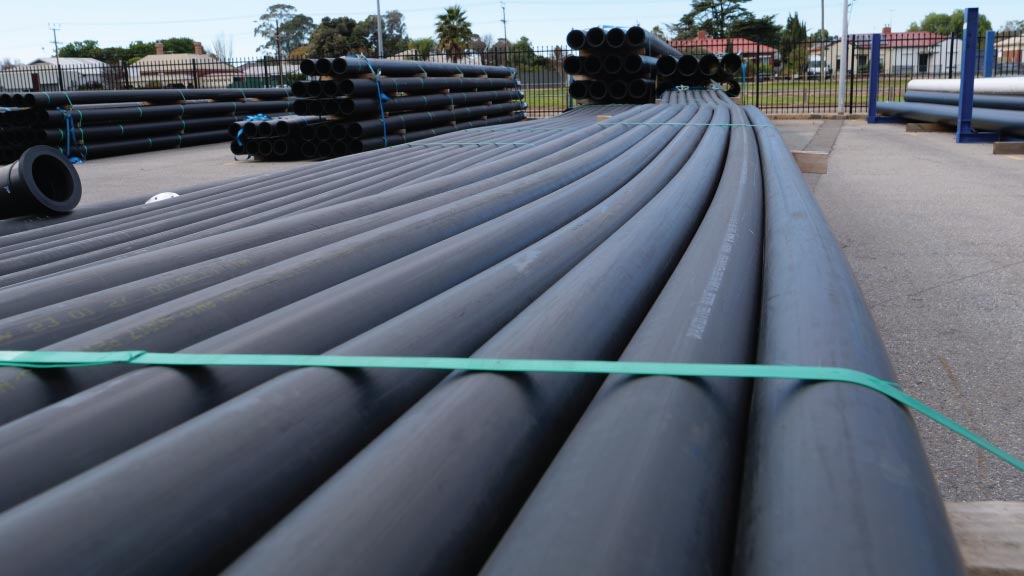
While the world obsesses over AI and electric cars, a quiet revolution is happening underground. HDPE pipes, those black, flexible tubes you might have seen at construction sites, are changing how we build cities.
Let’s talk numbers: The global HDPE pipes market was valued at USD 21.82 billion in 2024 and is projected to reach USD 28.46 billion by 2029, growing at 5.5% compound annual growth rate (CAGR) from 2024 to 2029. (Source)
Behind this massive figure lies a simple truth – these pipes solve problems that metal and concrete pipes cannot.
An Emergency Case in Sydney
A major water pipe has burst in Sydney’s south, resulting in masses of water spilling out. Emergency crews were called to the scene at Binya Place in Como to assess the damage, with sandbags offered to affected residents.

Whether you’re a contractor planning your next project, a municipal engineer researching infrastructure upgrades, or a property owner curious about your plumbing options, you must understand HDPE pipes. This guide breaks down everything, from basic concepts to installation techniques and professional use.
With over 30 years of experience working with HDPE across Australia and the Pacific Islands, we’ve gained a deep understanding of its strengths, limitations, and the common installation mistakes that arise.
This comprehensive guide to HDPE pipes examines their applications, benefits, and installation best practices. We’ll start with the basics and work our way to advanced techniques that even seasoned professionals might not know.
What is HDPE Pipe?
HDPE pipe is a piping system manufactured from high-density polyethylene — a tough, flexible thermoplastic produced from ethylene. It’s used to transport water, gas, slurry and waste across a wide range of pressure and temperature conditions.
Key characteristics at a glance:
- Material: High-density polyethylene (typically PE100 or PE80 grades)
- Appearance: Usually black, sometimes with colour stripes (blue for potable water, yellow or orange for gas)
- Joining methods: Butt fusion, electrofusion or mechanical fittings
- Lifespan: 50 to 100 years under normal operating conditions
- Common applications: Water supply, gas distribution, drainage, mining slurry, industrial process lines
Unlike metal pipes, HDPE resists corrosion, tolerates ground movement without cracking, and can be joined into continuous lengths with no weak points at the seams.
Types of HDPE Pipe
HDPE pipes are manufactured to suit specific applications, with wall thickness, pressure rating and colour markings varying by use. The three most common types in Australian infrastructure are:
| Type | Typical use | Key features | Colour marking |
| Water pipes | Potable water supply, irrigation, and fire services | Chemical-resistant, smooth bore prevents mineral build-up, AS/NZS 4020 compliant for potable use | Black with blue stripes |
| Gas pipes | Natural gas distribution (residential and industrial) | High leak resistance, handles pressure fluctuations, flexible enough to absorb ground movement | Yellow or orange |
| Electrical conduits | Protective housing for underground electrical and communication cabling | Non-conductive, impact-resistant, flexible for long continuous runs | Black, orange or red |

Benefits of HDPE Pipes
HDPE pipes deliver a combination of durability, flexibility and efficiency that few other materials match.
| Benefit | Why it matters |
| Long lifespan | 50–100 years under normal conditions. No rust, no corrosion, no chemical breakdown. |
| Flexibility | Absorbs ground movement, vibration and thermal expansion — suits seismic zones, reactive soils, and uneven terrain. |
| Hydraulic efficiency | Smooth inner bore improves flow rate and reduces pumping energy costs over the life of the system. |
| Cost-effectiveness | Lightweight (lower transport and handling costs), faster to install and requires less ongoing maintenance. |
| Environmental profile | Lower-energy manufacturing, smaller carbon footprint and fully recyclable at the end of life. |
The net result: fewer repairs, fewer replacements and a pipeline that continues to perform across decades of service.
How HDPE Pipe Works
Seamless Construction: Reducing Leak Risk
A significant advantage of HDPE pipes is their seamless construction. Unlike other materials that rely on joints, HDPE pipes utilise a fused joint system. This ensures that there are minimal weak points along the pipeline.
A strong joint system minimises the risk of leaks. This is of particular significance in applications such as gas distribution.
Here, the seamless pipe can improve safety and efficiency. HDPE pipes have a fused joint system that creates a seamless, leak-free connection, making them a reliable choice. Source: DRTS.
Flexibility and Strength in Diverse Applications
HDPE pipes aren’t just about transporting fluids. They are also used across a variety of fields due to their flexibility and strength.
This makes them ideal for construction projects. They can withstand harsh environmental conditions such as extreme temperatures and aggressive chemicals. This adaptability arises from their elasticity and tensile strength, which allows them to endure stress without cracking or breaking.
This resilience is well-documented in applications ranging from alpine environments to desert pipelines.
To explore the performance of HDPE pipes further, consider “The Pipe Book” by Robert Charles, which covers their utilisation in varied settings.
Environmental Integration
HDPE pipes show a strong environmental profile. They are recyclable and have a low carbon footprint. The pipe industry actively reduces emissions by using recycled materials. Their lightweight design, in particular, makes transport simpler and reduces logistics-related carbon emissions.
Their environmental integration aligns well with global sustainability efforts.
Those keen on understanding the environmental impact in detail may find Mackenzie L. Davis’s “Introduction to Environmental Engineering” useful. This book serves as a guide for assessing the environmental benefits of various engineering materials, including HDPE pipes.
Challenges and Mitigation Strategies
Despite their benefits, HDPE pipes can face challenges, particularly with UV sensitivity and potential damage from extreme temperature fluctuations. However, black HDPE pipes offer a built-in advantage – they contain carbon black, which acts as a natural UV stabiliser, providing superior protection against sunlight exposure. This makes them highly durable for outdoor applications without the need for additional coatings or stabilisers!
By choosing black HDPE pipes, engineers and professionals can enhance longevity, reduce maintenance requirements, and improve overall system reliability in demanding environments.
HDPE Pipe Installation Guide
A successful HDPE installation comes down to four stages, each with its own critical checks. Skipping steps is where most failures start, especially at joint prep and final testing.
Step #1: Site Preparation
- Conduct a geological survey — check soil type, water table, and load-bearing capacity
- Clear and level the trench route, removing rocks, roots and sharp debris
- Plan erosion control on sloped terrain (silt fences, geotextiles)
- Mark the pipeline route with spray paint, stakes or flags
- Use utility location services to identify existing underground services
- Plan access points for future maintenance and inspection
Step #2: Pipe Joining
Choose the right technique for joining. Butt fusion is common. It involves heating the pipe ends and pressing them together. Electrofusion is another method. It uses electrical fittings to melt and join. Select based on project needs and available equipment.
Common Jointing Techniques
| Method | Best for | Does it need heat? | Is it a reusable joint? |
| Butt fusion | Large-diameter, straight runs | Yes | No |
| Electrofusion | Smaller or complex areas, repairs | Yes (via fitting) | No |
| Compression fittings | Repairs, temporary, low-pressure | No | Yes |
| Camlock fittings | Industrial, frequent assembly/disassembly | No | Yes |
| Bolted flange | Large pipe, high-pressure, maintenance access | No | Yes |
| Shouldered fittings | Dynamic loads, mining, vibration-prone | No | Yes |
For every joint:
- Clean pipe ends to remove contaminants
- Align pipes precisely before fusion
- Follow the manufacturer’s temperature and pressure settings
- Allow joints to cool and set fully before moving
- Inspect visually and pressure-test before backfilling
Step #3: Pipe Laying
- Lay pipes in straight alignment. Use alignment tools for accuracy. Improper alignment can cause stress and damage.
- Place a bedding layer of sand or fine gravel (no sharp stones) to help prevent physical damage from external forces.
- Cover pipes with even, consistent backfill, compacted as you go.
- Avoid point loads from rocks, debris or uneven compaction.
Step #4: Final Checks and Testing
- Run a hydrostatic pressure test — fill with water and pressurise, monitor for drops
- Visually inspect alignment and bedding
- Address any issues before final backfill and commissioning
- Document the installation for future reference
HDPE Pipe Maintenance Tips
With routine care, HDPE pipes can last 50–100 years. The maintenance regime is simple but worth doing consistently.
1. Routine Inspection (3-6 months)
- Check the pipe surface for cracks, scratches and unusual marks. Guided wave testing, a non-destructive method, can find hidden defects inside the pipe.
- Look for damp spots or signs of leaks.
- Run pressure tests on joints and sections under load.
- Consider guided wave testing for hidden internal defects.
- Record findings to track pipe health over time. Keeping detailed records helps track the system’s health over time.
2. Cleaning Procedures (every 6 months)
- Flush pipes with water to clear sediment and build-up
- Use non-corrosive cleaning agents only (confirm HDPE compatibility)
- Rinse thoroughly after any chemical cleaning
Recommended Tools and Equipment
| Tool | Purpose |
| Scrapers | Remove oxidation and contaminants before joining |
| Antiseptic wipes | Clean pipe ends and fittings pre-installation |
| Soft brushes or cloths | General surface cleaning without scratching |
| Non-corrosive cleaning agents | Safe chemical cleaning |
| Flushing systems | Clear internal debris with pressurised water or air |
| Inspection mirrors and lights | Check hard-to-reach sections |
3. Best Practices for Longevity
- Avoid putting extra stress on pipes (excess weight, sudden temperature changes)
- Use pipe casing or barriers in high-traffic or vehicular areas
- Inspect protective coverings regularly for damage
- Document all repairs and inspections for long-term tracking
Following these steps consistently keeps the system running at full performance and well ahead of any avoidable failures.
Conclusion
HDPE pipes are the workhorses of modern infrastructure. Their strength lies in the combination of durability, flexibility, and cost-effectiveness. After learning about their benefits and installation methods, you now have a clear understanding of why engineers and contractors choose HDPE pipes for critical projects.
The success of your HDPE pipe installation depends on following proper procedures. Remember the key steps: careful site preparation, precise heat fusion for joints, and correct pipe-laying techniques. Regular maintenance, including routine inspections and appropriate cleaning, will help your HDPE pipe system serve reliably for decades.
For professionals managing water or gas distribution projects, HDPE pipes offer a practical solution that meets both safety and efficiency requirements. Their resistance to corrosion, chemicals, and environmental stress makes them suitable for various applications, from drinking water systems to natural gas distribution.
Take time to review local regulations and specifications before starting your HDPE pipe project. Consider consulting certified installers for complex installations. With proper planning and execution, HDPE pipes will provide a reliable, long-lasting solution for your infrastructure needs.
Keep this guide as a reference for your next HDPE pipe project. Your commitment to proper installation and maintenance will ensure optimal performance for years to come.
If you would like some expert advice or support with your next project, give us a call at 1300 362 229 or contact our friendly customer support team via the form on our website.

